 Ravindar
India — A Land of Unity in Diversity
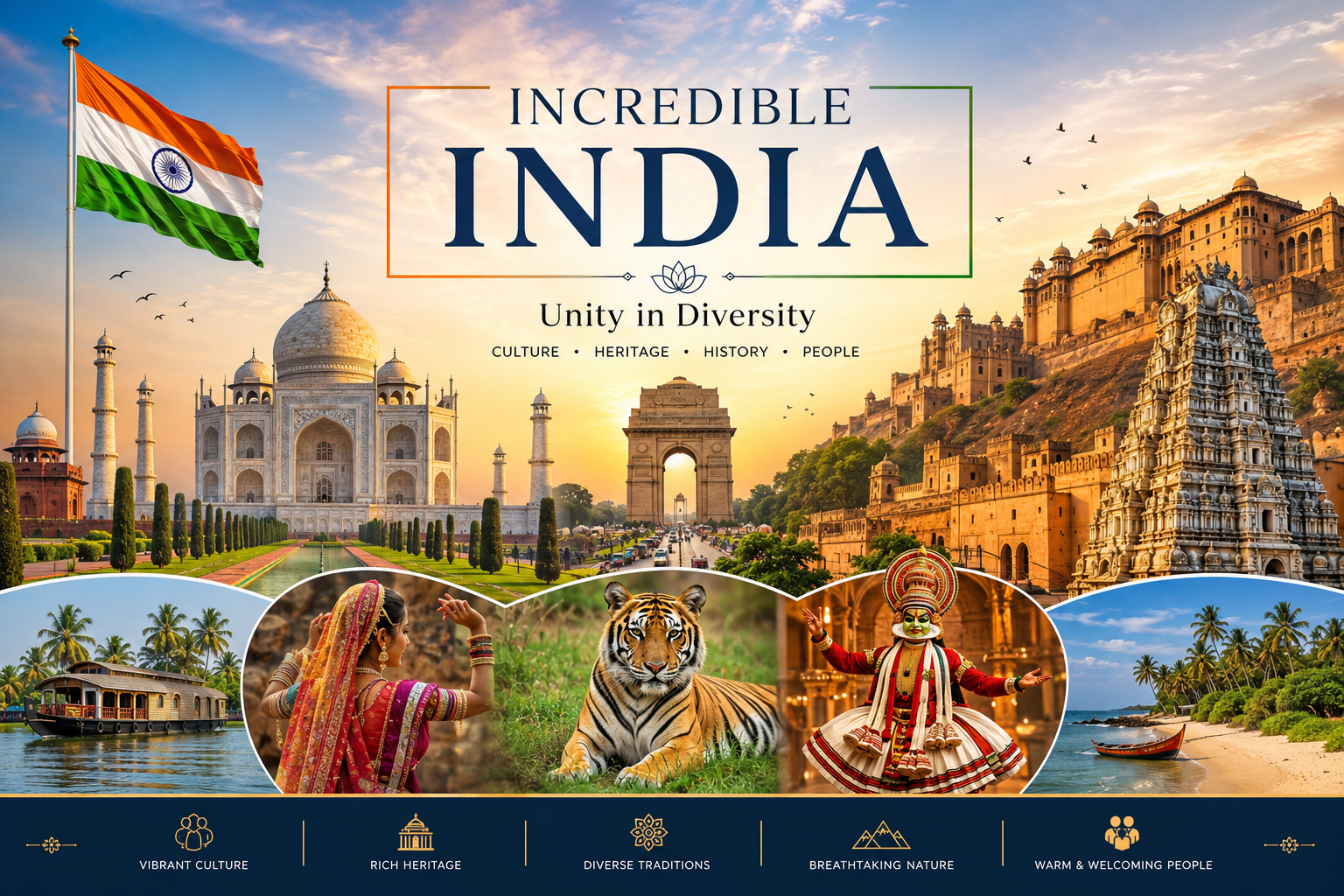
India is a remarkable country known for its ancient civilization, rich cultural heritage, diverse traditions, breathtaking landscapes and rapid modern development.
India at a Glance
India, officially known as the Republic of India, is one of the world's most diverse and culturally rich nations. Located in South Asia, India has played an important role in shaping human civilization through its history, knowledge, traditions, art and cultural heritage.
The country is famous for its remarkable diversity. From the snow-covered Himalayas in the north to the tropical landscapes of the south, and from the deserts of Rajasthan to the lush green regions of the Northeast, India offers an extraordinary variety of geography and natural beauty.
Rich History
India has a civilization spanning thousands of years and a fascinating history shaped by many important kingdoms, empires and historical movements.
Unique Culture
Indian culture includes diverse languages, traditions, festivals, music, dance, clothing, food and artistic expressions.
Natural Diversity
Mountains, forests, deserts, beaches, rivers and tropical landscapes make India's geography remarkably diverse.
Geography of India
India covers approximately 3.28 million square kilometres and is geographically one of the world's largest countries. Its geographical diversity is one of its greatest strengths.
The Himalayas form a spectacular natural boundary in the north, while the Arabian Sea lies to the west, the Bay of Bengal to the east and the Indian Ocean to the south. This unique geographical position has influenced India's climate, agriculture, trade and culture for centuries.
🇮🇳 Capital and National Identity
New Delhi is the capital of India and an important centre of government, administration and diplomacy. India is a sovereign, socialist, secular, democratic republic governed according to its Constitution.
The Indian national flag, known as the Tiranga, represents the country's national identity and values.
History and Heritage
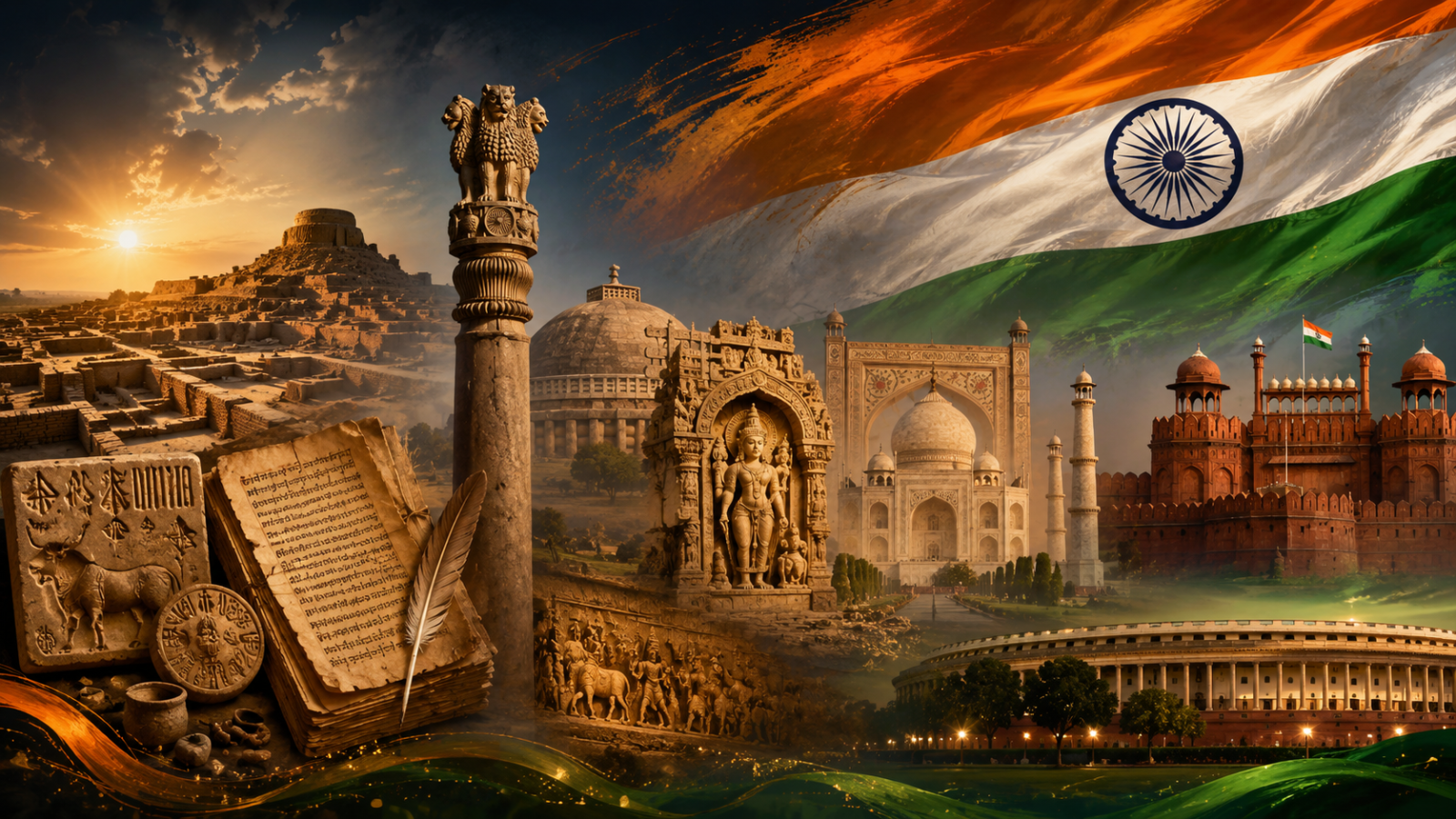
India's history is among the oldest and most fascinating in the world. The Indus Valley Civilization represents one of the earliest urban civilizations known to humanity.
Over the centuries, India witnessed the rise and development of major kingdoms and empires, including the Mauryan and Gupta periods, followed by many regional kingdoms and later the Mughal and British periods.
India became independent from British rule on 15 August 1947. The Constitution of India came into effect on 26 January 1950, establishing India as a republic.
Culture and Traditions
One of India's greatest strengths is its cultural diversity. Different parts of the country have their own languages, traditional clothing, cuisines, festivals, music, dance forms and customs.
Festivals such as Diwali, Holi, Eid, Christmas, Navratri, Durga Puja, Pongal, Onam and Baisakhi are celebrated in different parts of the country, reflecting India's vibrant cultural landscape.
Space & Science
India has developed significant capabilities in science, technology and space exploration through institutions and research organizations.
Digital India
Digital technologies, online services, digital payments and internet connectivity have transformed everyday life across the country.
Global Presence
India's growing economy, technology sector, culture and international relationships have given the country an increasingly important global presence.
Quick Facts About India
Why India Is Special
India is more than just a geographical nation. It is a civilization shaped by thousands of years of history, knowledge, traditions and cultural exchange. Its ability to bring together different languages, communities, traditions and lifestyles makes it a unique example of unity in diversity.
Today, India continues to combine its ancient heritage with modern innovation, technology and development, creating a distinctive identity on the global stage.