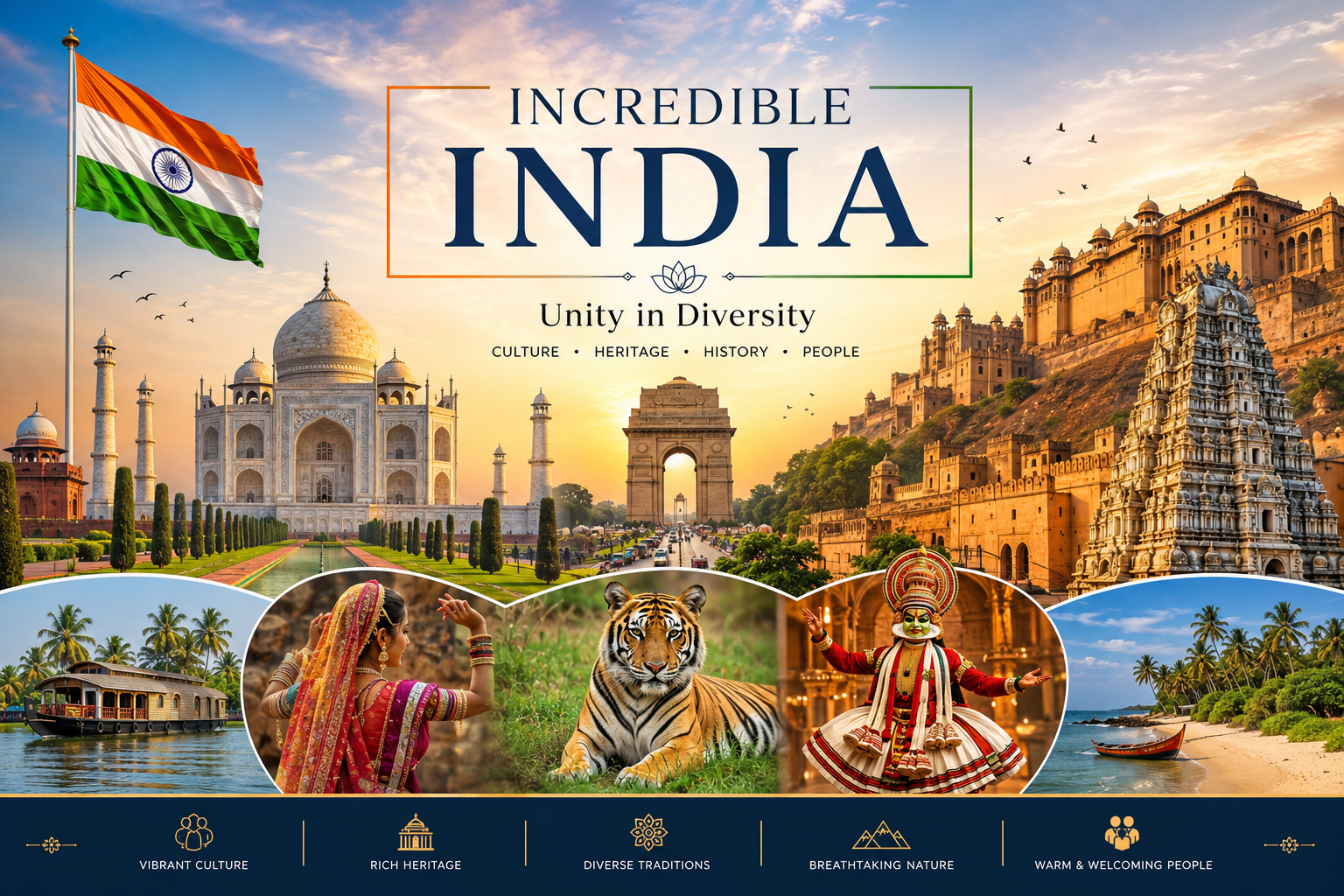
 Ravindar
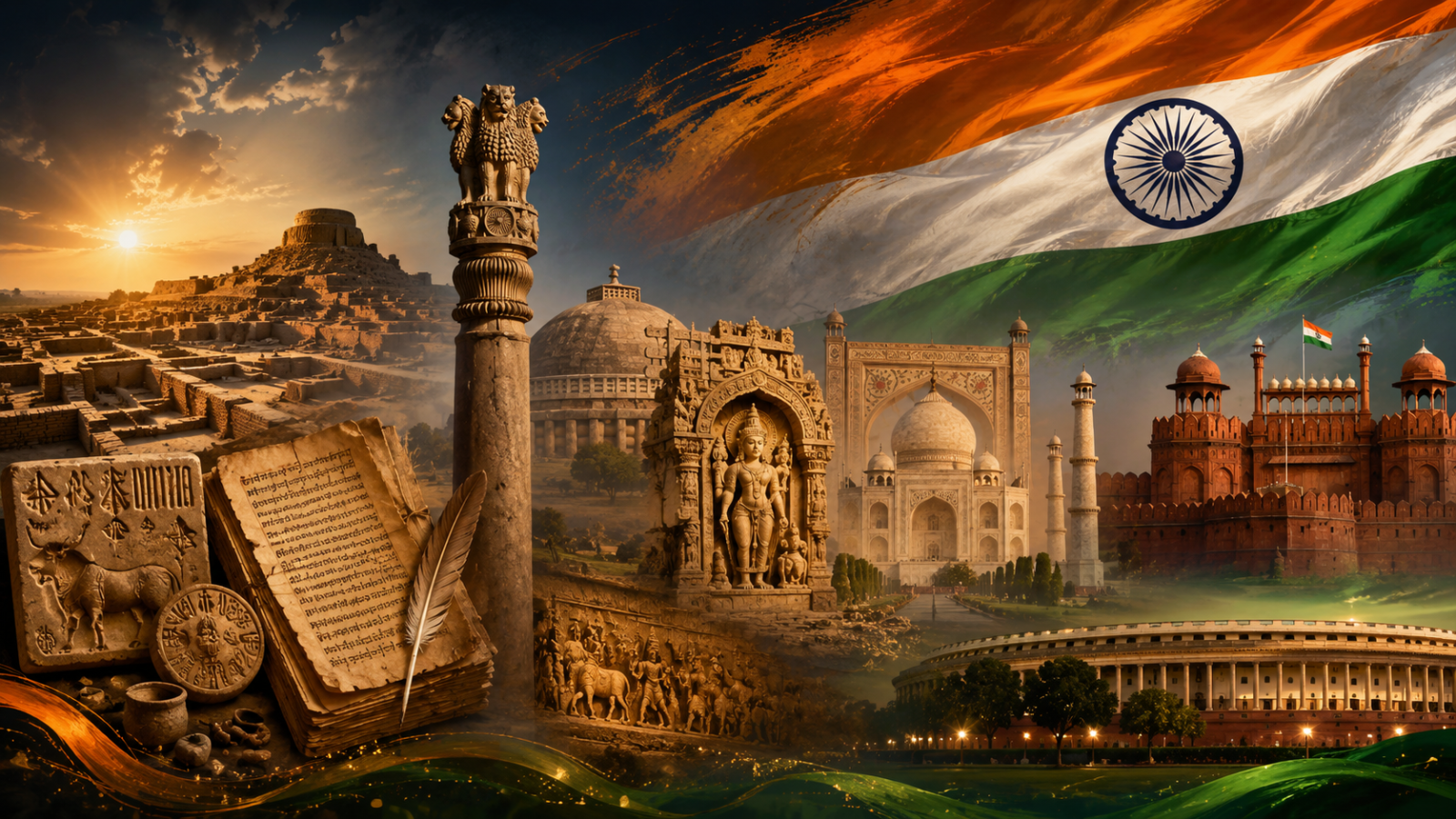
Discover India's extraordinary journey from ancient civilizations and powerful empires to independence and the modern republic.
📜 भारत का इतिहास
भारत का इतिहास दुनिया के सबसे प्राचीन, समृद्ध और विविध इतिहासों में से एक है। भारतीय उपमहाद्वीप ने हजारों वर्षों के दौरान अनेक सभ्यताओं, राजवंशों, साम्राज्यों और सांस्कृतिक परंपराओं का विकास देखा है।
भारत की ऐतिहासिक यात्रा केवल राजाओं और युद्धों तक सीमित नहीं है। इसमें विज्ञान, गणित, दर्शन, साहित्य, कला, वास्तुकला, धर्म और सामाजिक जीवन का भी महत्वपूर्ण योगदान रहा है।
सिंधु घाटी सभ्यता
सिंधु घाटी सभ्यता भारतीय उपमहाद्वीप की प्राचीन नगरीय सभ्यताओं में से एक थी। हड़प्पा और मोहनजोदड़ो जैसे नगर सुव्यवस्थित सड़कों, जल निकासी प्रणाली और नगर नियोजन के लिए प्रसिद्ध हैं।
वैदिक परंपरा और ज्ञान
वैदिक काल में धार्मिक, दार्शनिक और साहित्यिक परंपराओं का महत्वपूर्ण विकास हुआ। वेदों और उनसे जुड़ी परंपराओं ने भारतीय विचार और संस्कृति के विकास में महत्वपूर्ण भूमिका निभाई।
मौर्य साम्राज्य
चंद्रगुप्त मौर्य द्वारा स्थापित मौर्य साम्राज्य प्राचीन भारत के सबसे प्रभावशाली साम्राज्यों में से एक था। सम्राट अशोक के शासनकाल में साम्राज्य का विस्तार हुआ और बौद्ध धर्म के प्रसार को महत्वपूर्ण प्रोत्साहन मिला।
गुप्त काल
गुप्त काल को भारतीय इतिहास के महत्वपूर्ण सांस्कृतिक और बौद्धिक कालों में गिना जाता है। इस समय गणित, खगोल विज्ञान, साहित्य, कला और स्थापत्य के क्षेत्रों में उल्लेखनीय विकास हुआ।
क्षेत्रीय राज्य और सांस्कृतिक विकास
मध्यकालीन भारत में अलग-अलग क्षेत्रों में अनेक राजवंशों और राज्यों का उदय हुआ। इस अवधि में स्थापत्य, संगीत, साहित्य, चित्रकला और अन्य कलाओं की अनेक शैलियों का विकास हुआ।
मुगल काल
मुगल काल का भारतीय कला, स्थापत्य और संस्कृति पर महत्वपूर्ण प्रभाव पड़ा। ताजमहल, लाल किला और कई अन्य ऐतिहासिक स्मारक इस दौर की स्थापत्य विरासत के प्रसिद्ध उदाहरण हैं।
ब्रिटिश शासन
ब्रिटिश ईस्ट इंडिया कंपनी के प्रभाव के विस्तार के बाद भारत के बड़े हिस्से पर ब्रिटिश नियंत्रण स्थापित हुआ। बाद में ब्रिटिश क्राउन के अधीन शासन आया। इस अवधि में भारतीय समाज, अर्थव्यवस्था और राजनीति में बड़े बदलाव हुए तथा स्वतंत्रता आंदोलन मजबूत हुआ।
भारत की स्वतंत्रता
लंबे स्वतंत्रता आंदोलन के बाद भारत ने 15 अगस्त 1947 को ब्रिटिश शासन से स्वतंत्रता प्राप्त की। महात्मा गांधी सहित अनेक नेताओं और स्वतंत्रता सेनानियों ने स्वतंत्रता आंदोलन में महत्वपूर्ण भूमिका निभाई।
भारत बना गणराज्य
26 जनवरी 1950 को भारत का संविधान लागू हुआ और भारत एक गणराज्य बना। इसके बाद देश ने लोकतंत्र, शिक्षा, विज्ञान, उद्योग, कृषि और तकनीक सहित अनेक क्षेत्रों में लगातार विकास किया।
🇮🇳 भारत की ऐतिहासिक विरासत
भारत का इतिहास केवल साम्राज्यों और राजवंशों की कहानी नहीं है। यह ज्ञान, संस्कृति, दर्शन, विज्ञान, कला, साहित्य और लोगों की बदलती जीवनशैली की भी कहानी है। हजारों वर्षों की यह विविध विरासत आज भी भारत की पहचान को आकार देती है।
✨ निष्कर्ष
प्राचीन सभ्यताओं से लेकर आधुनिक लोकतांत्रिक गणराज्य तक भारत ने एक लंबी और महत्वपूर्ण ऐतिहासिक यात्रा तय की है। इसकी विविध संस्कृतियां और ऐतिहासिक विरासत आज भी भारत को दुनिया के सबसे अनोखे देशों में से एक बनाती हैं।
📜 History of India
The history of India is one of the oldest, richest and most diverse historical traditions in the world. Over thousands of years, the Indian subcontinent witnessed the development of civilizations, kingdoms, empires and diverse cultural traditions.
India's history is not limited to kings and battles. It also includes remarkable contributions to science, mathematics, philosophy, literature, art, architecture, religion and social life.
Indus Valley Civilization
The Indus Valley Civilization was one of the earliest urban civilizations of the Indian subcontinent. Cities such as Harappa and Mohenjo-daro were known for organized streets, sophisticated drainage systems and advanced urban planning.
Vedic Traditions and Knowledge
The Vedic period played an important role in the development of religious, philosophical and literary traditions. The Vedas and related traditions became significant parts of India's intellectual and cultural heritage.
Mauryan Empire
Founded by Chandragupta Maurya, the Mauryan Empire became one of the most influential empires of ancient India. Under Emperor Ashoka, the empire expanded significantly and Buddhism received important support.
Gupta Period
The Gupta period is considered an important era in Indian cultural and intellectual history. Mathematics, astronomy, literature, art and architecture experienced significant developments during this period.
Regional Kingdoms and Cultural Development
Medieval India witnessed the rise of numerous regional kingdoms and political powers. Architecture, music, literature, painting and other forms of art developed in different parts of the country.
Mughal Period
The Mughal period had a significant influence on Indian art, architecture and culture. The Taj Mahal, Red Fort and several other historic monuments are famous examples of the architectural heritage associated with this period.
British Rule
After the expansion of the British East India Company's influence, large parts of India came under British control. Later, India was governed directly under the British Crown. This period brought major political, economic and social changes and strengthened the Indian independence movement.
Independence of India
After a long independence movement, India became independent from British rule on 15 August 1947. Mahatma Gandhi and many other leaders and freedom fighters played important roles in India's struggle for independence.
India Became a Republic
On 26 January 1950, the Constitution of India came into effect and India became a republic. Since then, the country has continued to develop in democracy, education, science, industry, agriculture and technology.
🇮🇳 India's Historical Heritage
India's history is not simply a story of empires and dynasties. It is also a story of knowledge, culture, philosophy, science, art, literature and the changing lives of its people. This diverse heritage continues to shape India's identity today.
✨ Conclusion
From ancient civilizations to the modern democratic republic, India has travelled through a long and remarkable historical journey. Its diverse cultures and historical heritage continue to make India one of the world's most fascinating countries.